

Literature Review
Global demographic shifts are creating unprecedented challenges for societies worldwide. Currently, the proportion of individuals aged 65 years and above is growing faster than younger age groups (World Health Organisation, 2025). This shift in demographics motivates the public health imperative of understanding and supporting behaviours that enable individuals to maintain autonomy, health, and wellbeing across the life course. Among these behaviours, the timely initiation and completion of important tasks (or the failure to do so) may hold profound significance. Failing to complete an important tasks can often be due to procrastination. Procrastination is defined as the voluntary and irrational delay of intended actions despite expecting to be worse off for the delay (Klingsieck, 2013; Steel, 2007). Typically, procrastination is framed as an individualistic failure of self-regulation. However, in the context of an ageing population, the implications of procrastination may extend far beyond the individual, representing a critical but hitherto largely neglected public health concern.
According to prior research, approximately 15-20% of the population engage in procrastination to the point that it causes personal distress or difficulties (Harriott & Ferrari, 1996). This form of procrastination is known as chronic procrastination (Rozental & Carlbring, 2014). While extensively studied in academic contexts, where the prevalence of procrastination can reach as high as 95% among students (Abbasi & Alghamdi, 2015), this narrow empirical focus has created a critical knowledge gap.
The consequences of procrastination in later life are qualitatively different to those experienced in earlier life and carry substantially higher stakes. For older adults, delaying important tasks can have consequences just for academic performance, but for fundamental wellbeing (Kaftan & Freund, 2018). For instance, postponing health-related tasks such as health screenings can lead to late-stage disease diagnoses; delaying financial tasks could jeopardise retirement security; and avoiding advance care planning may precipitate crises for individuals and their families. These forms of delay also have the potential to compound stress, accelerate functional decline, increase healthcare costs, and ultimately threaten the very independence that public health initiatives for ageing populations seek to promote. As such, it is clear that procrastination is a critical and urgent matter for public health of older populations.
However, the current landscape of procrastination research cannot be readily applied to older adults without some considerations. The paradoxical nature of procrastination (i.e., knowingly acting against one’s own best interests) has made it a topic for researchers interested in self-regulation, motivation, and decision making (Ferrari, 2001; Pychyl & Sirois, 2016; Sirois & Pychyl, 2013; Steel & König, 2006). To date, most of the dominant theoretical models of procrastination have been developed primarily through research on younger populations. As such, these models may provide limited insight into the unique motivational landscape of older adulthood. Ageing brings with it many changes, and it is through these changes that the triggers, manifestations, and consequences of procrastination may yield different effects in older than in younger adulthood. A comprehensive understanding of procrastination across the lifespan is therefore essential, not only for advancing psychological theory but for developing effective, age-sensitive interventions that support timely action on tasks critical to health, financial security, and quality of life in later years.
This thesis addresses this research gap by examining procrastination in older adulthood (adults primarily aged 60+) through a lifespan-developmental lens. While it is beyond the scope of the thesis to provide an account of procrastination across the entire lifespan, here we consider one important life stage, older adulthood. Chapter 1 establishes the foundation for this investigation. In what follows, I will (1) provide a historical context for the research topic by tracing the conceptual evolution of procrastination from a moral failing to a psychological construct; (2) critically examine dominant theoretical frameworks from a lifespan developmental perspective; and (3) synthesise existing (limited) evidence on the unique consequences and manifestations of procrastination in later life.
The conceptual landscape of procrastination
To understand procrastination in later life, it is first essential to delineate what the construct is and how its conceptualisation has evolved over time. This section outlines this progression, beginning from its early historical interpretations as a characterological flaw to its current status as a multifaceted psychological phenomenon of self-regulatory failure. Ultimately, this shift has fundamentally shaped how we measure, study, and interpret procrastination.
From moral failing to psychological construct
Procrastination has a long history as a recognised aspect of human behaviour, and it has been consistently viewed through a moral and characterological lens. Ancient Egyptian hieroglyphs associated delay with neglect and forgetfulness (DeSimone, 1993), while classical philosophers established early frameworks for understanding willpower failure. Aristotle, in his Nicomachean Ethics, examined the concept of akrasia, or weakness of will, describing malakia as a specific form of akrasia in which individuals fail to act despite knowing what should be done (Steel, 2007). This concern was echoed by other historians and statesmen. Thucydides, an Athenian general and historian, documented the catastrophic consequences of political and military delay, while Cicero, a Roman consul and philosopher, framed procrastination as a moral weakness and failure of duty (McCloskey, 2011; Steel, 2007).
This view of procrastination persisted across cultural and historical contexts. Early Christian writers frequently warned against idleness and delay (e.g., Proverbs 6:9-11), while Buddhist philosophy identified kausidya (spiritual sloth) as antithetical to diligence (Rinpoche et al., 1997). This perspective continued during the Renaissance and Enlightenment as procrastination became more connected to laziness and inefficiency (DeYoung et al., 2010). The rise of the Industrial Revolution further cemented this perspective, promoting both productivity and efficiency and thus casting procrastination as its antithesis (Johnson, 1840). Ultimately, this historical context shows that while interpretations have changed, procrastination has commonly been seen as a failure of will and morality.
The emergence of psychology as a discipline facilitated a critical paradigm shift, reframing procrastination from the realm of morality to the realm of empirical science. Initially, this reframing was hampered by a lack of consensus regarding what procrastination was (Ferrari et al., 1995). Early research offered varied conceptualisations, with some scholars even proposing as a potentially functional form of strategic delay (Bernstein & Bernstein, 1996; Chun Chu & Choi, 2005; Ferrari, 1993). However, modern psychological research largely rejects this idea, focusing instead on procrastination’s irrational and self-defeating aspects.
The definition of procrastination
A robust conceptual framework now underpins the field’s consensus. According to Klingsieck (2013), to be classified as procrastination, a behaviour must meet multiple criteria (see Figure 1): (1) it involves voluntarily postponing (Milgram et al., 1998) an important activity (Lay & Schouwenburg, 1993); (2) the individual knows this delay is counterproductive and will likely lead to negative outcomes (Steel, 2007), and (3) the individual feels some form of negative emotions, such as guilt, anxiety, or stress (Ferrari et al., 1995; Simpson & Pychyl, 2009). This multi-part definition leads to the widely accepted view of procrastination as:
This conceptualisation is crucial for distinguishing procrastination from similar behaviours. For instance, procrastination is not the same as strategic delay (Anderson, 2003), which represents a rational postponement to optimise outcomes (e.g., postponing starting an assignment to conduct more research). Nor is it the same as idleness, as procrastinators often engage in other tasks that offer immediate but less important rewards (Wu et al., 2016). The key difference is the self-defeating nature of procrastination (Sabini, 1982). The individual knows delaying is against their best interest but chooses to do it anyway.
In this sense, procrastination can be understood as a breakdown in the cognitive, emotional, and behavioural processes that align actions with intentions and long-term goals (Rozental & Carlbring, 2014). Cognitively, intentions fail to translate into effective planning or initiation. Emotionally, short-term mood regulation overrides longer-term goal pursuit. Behaviourally, an action is deferred despite awareness of its importance. It is the interaction of these processes, rather than the act of delay itself, that defines procrastination.
This modern understanding significantly impacts how we view procrastination in later life. For older adults, tasks seen as “necessary and personally important” are quite different from that of a younger adult. They often relate to health, finances, and/or social legacy. Delaying a medical appointment, putting off financial planning, or avoiding making a will is rarely a strategic choice. Rather it is better understood as an unnecessary, voluntary delay that can have serious and lasting consequences for one’s independence and wellbeing. Or more simply put, procrastination.
The prevalence and general consequences of procrastination
Before examining how procrastination affects older adults, it is first important to consider its prevalence and general impact in the wider population (see Table 1). Epidemiological studies suggest that approximately 15-20% of the adult population identify as chronic procrastinators (Harriott & Ferrari, 1996). In certain contexts, such as academia, this figure increases dramatically, with up to 95% of students reporting frequent procrastination (Abbasi & Alghamdi, 2015). Such rates underscore procrastination to be a prevalent and maladaptive behaviour.
The consequences of procrastination are equally well-documented and extend beyond productivity. A substantial body of research links chronic procrastination to significant psychological and physical morbidity. Prior research consistently associate procrastination with elevated levels of stress (Johansson et al., 2023; Sirois et al., 2003; Stead et al., 2010), negative emotional states (Nie et al., 2025; Van Eerde, 2003) and reduced overall wellbeing (Sirois et al., 2003; Tice & Baumeister, 1997; Van Eerde, 2000). Additionally, procrastination is linked to poorer academic and job performance (Abbasi & Alghamdi, 2015; Van Eerde, 2003), lower financial stability (Shah & Mukherjee, 2025), and increased interpersonal strain (Ferrari et al., 1998). Collectively, these findings establish procrastination as a significant failure of self-regulation with real-world costs across various areas of life.
| Domain | Key Findings |
|---|---|
| Prevalence (general populations) | 15-20% of adults report chronic procrastination |
| Prevalence (student populations) | 80-95% of students report procrastination |
| Psychological effects | Associated with increased stress, anxiety, depression, and reduced wellbeing |
| Performance outcomes | Associated with poorer academic and work performance, and greater financial instability |
| Interpersonal effects | Associated with increased conflict and relational strain |
From looking at Table 1, it becomes evident that while procrastination has substantial real-world costs, its expression and significance may change across the lifespan. Although most procrastination research to date has focused on younger and student populations, several studies including older adults reveal a distinctive U-shaped developmental trajectory. For instance, McCown & Roberts (1994) found that procrastination typically declines from early adulthood through midlife, up until approximately 60 years, after which it begins to rise again (see Figure 2 for an illustration of these results). A similar pattern was reported by Beutel et al. (2016) in a large sample (\(n = 2{,}527\)) ranging from adolescence (14 years) to very old age (95 years), with procrastination levels increasing again after approximately age 70. Interestingly, the authors did not elaborate on potential explanations. While the initial decline is readily explained by the maturation of self-regulatory faculties and personality traits, particularly the normative increase in conscientiousness, which happens around age 20-30 (Roberts et al., 2006), the subsequent rise presents an interesting theoretical puzzle that cannot be fully explained by the models developed using younger populations.
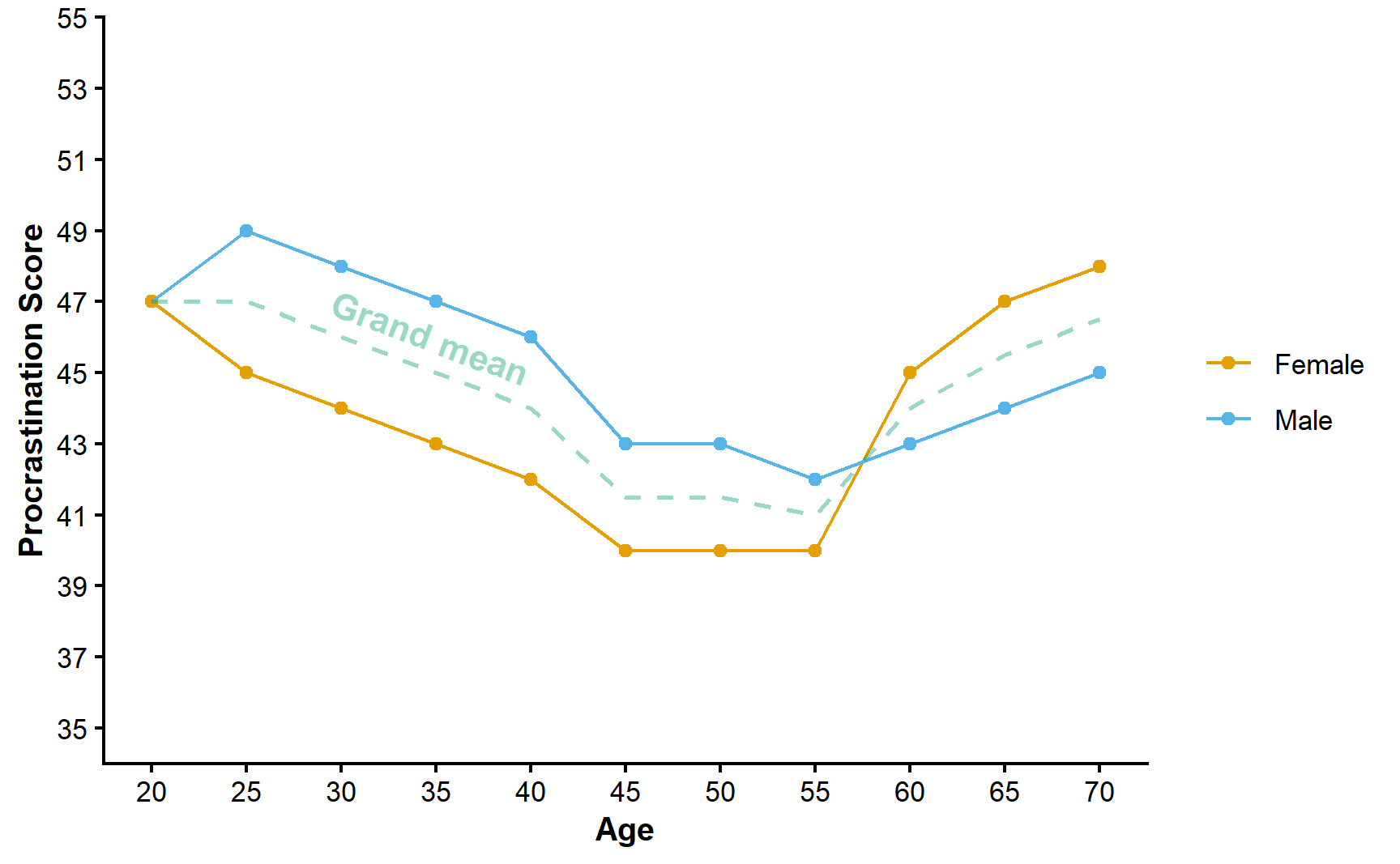
Early explanations regarding life course trajectories in procrastination such as that depicted in Figure 2 pointed to cohort effects (experiences of the Great Depression and World War II) or major life transitions such as retirement and health decline (Ferrari et al., 1995). Individuals who grew up during economic hardship and wartime mobilization were likely exposed to strong norms of duty, urgency, and long-term planning, where delay carried serious consequences. However, as they aged and the structural pressures of work and family obligation receded, the behavioural expression of these norms may also have weakened.
However, cohort explanations alone are insufficient. A more complete explanation requires an integration of several likely age-specific psychological shifts: (1) a fundamental change in time perspective and motivation that devalues long-term utility (Carstensen et al., 1999; Sirois & Pychyl, 2013); (2) increased demands from complex environments that can overwhelm personal competencies (Davis, 1989; Lawton & Nahemow, 1973); and (3) the depletion of self-regulatory resources by the demands of health management (Diehr et al., 2013; Sirois, 2015). As I will argue in the following sections, what appears as a mere reduction in self-regulation may instead be a coherent, if maladaptive, re-allocation of resources away from aversive, future-oriented tasks that threaten the self-concept, and toward activities that maintain emotional equilibrium in the present.
A lifespan perspective on ageing and procrastination
Given these high stakes, it becomes essential to examine how well existing theoretical frameworks of procrastination account for the unique developmental context of ageing. The main theories in procrastination research, mostly based on studies of younger adults in schools and workplaces, offer a helpful but incomplete understanding of this self-regulatory failure in older adults.
For older adults, procrastination may manifest in unique life domains such as health, finances, and legacy planning. Additionally, procrastination can be affected by age-specific developmental factors. Such factors may include shifting time horizons, changing social roles and managing ongoing health issues (Carstensen et al., 1999; Guo et al., 2022; Sirois, 2015). These factors create a context in which the triggers, manifestations, and consequences of procrastination may be fundamentally transformed. To better understand these processes, we need to re-evaluate and adjust existing theories using a lifespan perspective that’s focused on older adulthood.
As such, this section provides a critical examination of the main theories that have influenced the field of procrastination research. It starts with the basic traits related to procrastination and then moves through the key aspects of self-regulation and motivation. It also considers how situational and individual circumstances interact to impact procrastination, and how personal narratives can support procrastination. Finally, I examine how our external surroundings change the way we think about procrastination in later life. The ultimate goal of this theoretical review is not to reject existing theories but to evaluate how well they apply and what their limits are. Ultimately, this will help support the proposed lifespan-informed model of procrastination (see Figure 3).
Dispositional foundations
Trait-based approaches conceptualise procrastination as a relatively stable, cross-situational individual difference rooted in enduring personality structures (Ferrari, 2011; Steel, 2007). This perspective posits that chronic procrastination stems from enduring dispositional characteristics that systematically shape how individuals set goals, regulate impulses, and respond to task demands. Prior meta-analytic evidence robustly links procrastination to low conscientiousness, high neuroticism, impulsivity, and maladaptive perfectionism (Meng et al., 2024; Sirois, 2007; Van Eerde, 2003; Xie et al., 2018). However, a lifespan perspective suggests that the impact and expression of these traits upon procrastination may be altered in later life.
Within trait research, conscientiousness (defined as the quality of working hard and diligently) emerges as the strongest protective factor against procrastination (Meng et al., 2024), facilitating planning, behavioural regulation, and sustained goal focus (McCrae & Costa Jr, 1991; Zhao & Seibert, 2006). As such, those with higher levels of conscientiousness tend to procrastinate less. However, while the linear increase in conscientiousness across the lifespan (see Roberts et al. (2006)) could theoretically lead to less procrastination in later life, this possibility should be contextualized within the heightened stakes of the older adult task environment. The complex, self-managed tasks of later life, such as adhering to medication regimens, navigating healthcare systems, and managing retirement finances, demand a high degree of order and diligence. Unlike that of a procrastinating student, a lapse here does not result in a poor grade but rather can directly threaten health, financial security, and independent living. Thus, while the trait level of conscientiousness may be higher, the functional demand for its effective expression is simultaneously greater, creating a novel risk profile even for the relatively organized older adult.
Conversely, while neuroticism (defined as a tendency toward negative emotional states) may decline on average (Roberts et al., 2006), its behavioural impact, which typically involves negative emotional reactivity and poor stress coping, can be heightened by the existential nature of ageing-related tasks. Procrastination is frequently triggered by tasks that elicit stress or personal vulnerability (Sirois & Pychyl, 2013). With advancing age, older adults are more likely to be confronted with experiences that are direct confrontations of their own personal vulnerability and mortality, such as completing advanced directives, addressing a troubling health symptom, or experiencing the loss of a friend or loved one. For an individual with even moderate neuroticism, delaying these tasks may function as a powerful form of existential avoidance, a short-term strategy to manage the profound anxiety associated with physical decline and finitude (Fabiś & Muszyński, 2024). This creates a critical paradox: the tasks most essential for maintaining future autonomy are precisely those most likely to be postponed due to their emotional aversiveness (Pychyl & Sirois, 2016).
Furthermore, perfectionism (defined as having high standards for oneself, while also having extreme self-critical tendencies) may be reconfigured around domains central to late-life identity, such as independence and self-reliance (Yuen et al., 2007). For instance, an older adult who defines their self-concept through independence may perceive using a walking aid or accepting help with household chores as a profound personal failure (Bailey et al., 2019; Resnik et al., 2009). This perfectionistic standard can make necessary adaptive tasks feel existentially threatening, rendering them prime candidates for procrastination (Sirois et al., 2017; Xie et al., 2018). The drive to maintain a flawless front of capability, fused with the fear of being seen as a burden, may paralyse decision-making and help-seeking behaviour.
Core mechanisms of delay
Complementary theoretical frameworks could be considered alongside the dispositional theories to help us uncover the central explanatory mechanisms for how procrastination unfolds. The self-regulation and motivation models conceptualise procrastination as a dynamic failure in the processes that translate intentions into goal-directed action.
First, the self-regulation framework positions procrastination as fundamentally cognitive; a breakdown in the capacity to align thoughts, emotions, and actions with long-term objectives (Baumeister & Heatherton, 1996). In other words, a failure to translate intentions into timely action despite possessing the necessary capability (Pychyl & Flett, 2012; Sirois & Pychyl, 2013; Steel, 2007). Prior research (Ferrari et al., 1995; Rebetez et al., 2016; Schouwenburg & Groenewoud, 2001) has linked this failure to deficits in subdomains of executive functioning, particularly inhibitory control (the ability to actively ignore irrelevant stimuli) and sustained attention (the ability to maintain focus on a particular stimulus over a long period of time).
In later life, declines in these subdomains may be exacerbated by natural declines (either age-related or health-related) in processing speed and working memory (Eckert et al., 2010; O’Halloran et al., 2014). Inadvertently, these declines are also related to procrastination (S. Zhang et al., 2019). From this perspective, procrastination in later life may represent not just a self-regulatory failure, but also a partial breakdown in some of the cognitive underpinnings of self-regulation itself.
In addition, the very nature of a self-regulatory demand changes in later life. Tasks such as managing complex medication regimens, navigating healthcare systems, or organising legal affairs require not only sustained cognitive effort but also serve as reminders of declining health, dependence, or mortality (Al-Noumani et al., 2019; Maxfield et al., 2010). Within this context, procrastination may also represent a motivated avoidance of aversive tasks, ones that in this case, threaten one’s self-concept as a competent, autonomous individual.
This perspective can be further extended through the concept of ego depletion, which proposes that self-control draws upon a finite set of cognitive and emotional resources (Baumeister et al., 2018). If self-regulation depends upon a finite reserve of resources, then the cumulative demands of later life may leave fewer resources available for additional tasks. Many older adults face ongoing self-regulatory demands, particularly with managing health conditions and complex care routines (Guo et al., 2022). These demands may gradually deplete the resources needed for initiating less urgent (albeit important) actions, in turn increasing vulnerability to delay.
Complementing this, motivational frameworks help explain why actions becomes harder to initiate in the first place. Temporal Motivation Theory1 (TMT; (Steel et al., 2018; Steel & König, 2006)) proposes that motivation at any given moment depends on four factors: expectancy (how likely success feels), value (how worthwhile the outcome seems), impulsiveness (how strongly one discounts delayed rewards), and delay (how far away the outcome is in time).
\[\text{Motivation} = \frac{(\text{Expectancy} \times \text{Value})}{( 1 + \text{Impulsiveness} \times \text{Delay})}\]
Conceptually, the numerator of the equation reflects the perceived payoff of acting (i.e., tasks tend to feel more motivating when success seems likely and the outcome is important), while the denominator reflects temporal and self-regulatory costs (i.e., motivation weakens as rewards become more distant in time, particularly for individuals who are more sensitive to delay). Thus, procrastination becomes more likely when the immediate costs of an action outweighs the anticipated future benefits (Steel & König, 2006)
When taken from a lifespan perspective, each element of this equation may undergo a systematic transformation in later life. Expectancy may weaken for novel, effortful, or technologically complex tasks as perceived competence and self-efficacy decline, even when the objective ability for the task remains (Hu, 2024; Thomas et al., 2023). Task value may be directed towards emotionally meaningful goals and away from long-term utility (Baltes & Baltes, 1990; Carstensen, 2001). Meanwhile, delay may be altered by age-related changes in temporal discounting (Green et al., 1999). Finally, while trait impulsiveness tends to decline in later life (Roberts et al., 2006), the desire to avoid negative emotional states and minimise immediate distress may serve a comparable role (Wolfe et al., 2022).
Self-Determination Theory (SDT) adds a further layer of understanding by emphasising the quality of motivation (Deci & Ryan, 2009). SDT distinguishes between autonomous motivation (i.e., acting out of personal endorsement or intrinsic value) and controlled motivation (i.e., acting due to external pressure or obligation). Tasks perceived as externally imposed are more likely to elicit controlled motivation. Within younger adult and student samples, controlled motivation has been associated with higher levels of procrastination, likely because externally regulated tasks evoke resistance and reduced internal commitment (Kljajic et al., 2022). In contrast, relatively little is known about how motivational quality shapes procrastination in later life. Despite this, given the importance of autonomy in later life (Carstensen & Hartel, 2006), it is plausible that externally imposed demands is later life may be particularly vulnerable to delay.
When taken together, these perspectives reveal an interesting facet to self-regulation in older adulthood. In general, older adulthood is associated with selective goal prioritisation (Carstensen, 2001), a process that is generally adaptive. However at the same time, these adaptive shifts may have unintended consequences. The stronger focus on maintaining emotional well-being and preserving autonomy that comes with getting older might make it more appealing to avoid tasks that feel stressful, externally imposed, or threatening to one’s sense of independence. In this sense, the difficulty does not necessarily stem from weaker self-control, but from how that self-control is directed (i.e., prioritising short-term emotional comfort over longer-term outcomes).
Interplay of state and context
While self-regulation and motivation provide the core mechanisms of procrastination, context-based frameworks are essential for understanding how procrastination is triggered in daily life. This framework conceptualises procrastination not as a static trait but as a dynamic outcome between an individual’s resources and the specific demands of their context (Blunt & Pychyl, 2000; Klingsieck, 2013; Steel, 2007). It helps explain why even typically punctual individuals sometimes delay, and why habitual procrastinators occasionally act decisively.
Evidence from general populations supports this perspective. Situational factors such as task ambiguity, task aversiveness, and long deadlines have all been associated with greater likelihood of delay (Abbasi & Alghamdi, 2015; Blunt & Pychyl, 2000). In addition, internal states such as stress, fatigue, and negative mood can make procrastination more likely (Meng et al., 2024; Nie et al., 2025; Sirois, 2023). Together, these findings suggest that procrastination is more than just a stable dispositional tendency, but also context-sensitive and can be shaped by the interaction between situational pressures and momentary psychological resources.
For older adults, these situational determinants are likely to be reconfigured by changes in time perspective. Socioemotional Selectivity Theory (SST; (Carstensen, 2001)) proposes that individuals continuously monitor their future time. When time is perceived as limited, individuals tend to prioritise emotionally meaningful experiences over long-term goals (Carstensen & Hartel, 2006). Prior evidence supports this by demonstrating that older adults tend to show a stronger preference for emotionally meaningful social interactions and tendency to allocate attention and memory toward emotionally salient information (Lang & Carstensen, 2002).
If motivational priorities do indeed shift in this way, the situational determinants of procrastination may also take on qualitatively different meanings in later life. For instance, task aversiveness may become less about boredom in later life and more related to ego threat (Bailey et al., 2019; Resnik et al., 2009). Accordantly, a task like learning a new digital health platform or navigating an online banking system is not merely inconvenient but can feel like a high-stakes test of cognitive competence (Thomas et al., 2023). Similarly, completing an advanced care directive2 is not a simple administrative task but a direct confrontation with one’s own mortality (Sneddon, 2020). In such contexts, procrastination may function as a protective psychological barrier, allowing the individual to avoid an immediate threat to their self-concept (Ferrari & Dı́az-Morales, 2007). In addition, the perceived value of a task is filtered through an emotional meaning lens. An older adult may diligently plan a family reunion (an activity high in emotional meaning and social connection) while indefinitely postponing pension and/or health-care paperwork (an activity with high long-term utility but low immediate emotional payoff). From an SST perspective, this “neglect” may not reflect a self-regulatory failure, but simply re-prioritisation, blurring the line between maladaptive delay and adaptive selectivity.
Additionally, the daily enactment of these dynamics is further mediated by another state consideration: physiological ageing. Experience sampling studies suggest that procrastination is highly sensitive to transient states like mood and fatigue (Prem et al., 2018; Wieland et al., 2022). Individuals in later life may be more likely to experience health challenges which themselves can deplete the resources needed for self-regulation (Beauregard et al., 2015; Sirois, 2015). For instance hypertension, which is more prevalent in older adulthood (Mancia et al., 2013; Tsao et al., 2022), necessitates consistent self-care. Yet hypertension itself can deplete the resources needed for such behaviours (Artinian et al., 2010). Consequently, an older adult may delay a complex decision due to resource-based exhaustion, not laziness. Moreover, the “tempting alternatives” that trigger delay also evolve from active distractions (e.g., social media) toward activities offering cognitive or physical relief (e.g., rest), aligning with both reduced energy and the SST-driven preference for low-conflict emotional states (Cho et al., 2018; Scheibe et al., 2015).
Internal narrative of delay
However, the core mechanisms of both self-regulation and motivation are not merely cognitive calculations. Rather, they are sustained by a rich internal narrative of thoughts and emotions (Balkis & Duru, 2018; Ellis & Knaus, 1977). For older adults, this internal dialogue may likely be shaped by concerns about identity, competence, and legacy, making it a critical maintaining factor for procrastination.
Cognitive-behavioural models posit that our emotional and behavioural responses (e.g., anxiety and avoidance) are not determined by situations themselves, but by our interpretations of those situations (Beck, 1979). According to this perspective, procrastination is sustained by a series of maladaptive, task-related cognitions (Burka & Yuen, 2024; Ellis & Knaus, 1977; Steel, 2007). In later life, these cognitions are likely to become profoundly age-specific and identity-laden (Nieuwenhuis et al., 2018; Teo et al., 2022). A task like asking for help with finances or healthcare might be interpreted in the context of one’s ageing as for example, “asking for help proves I’m no longer as capable as I once was” , directly threatening a core aspect of one’s self-concept. These cognitive distortions (which could include catastrophising, overgeneralisation, and personalisation) may transform neutral or beneficial tasks into profound psychological threats, driving avoidance and self-neglect (M. Zhang & Zhang, 2025). These distortions could then provide the “script” for the ego threat discussed in state-based models.
Meanwhile, Self-Worth Theory (Covington, 1984) provides an additional layer of understanding by explaining why this self-handicapping strategy is so compelling. The theory suggests that individuals are motivated to protect their global sense of self-worth. For an older adult who may value independence and cognitive sharpness (Yuen et al., 2007), the possibility of confronting limitations, whether through a formal memory assessment or the simple need for a walking aid, can be threatening to self-worth (Bailey et al., 2019). By procrastinating, a ready-made excuse is already available if potential failure arises. Should they perform poorly, failure can be attributed to not trying hard enough or not having enough time, rather than a fundamental lack of ability. This “self-handicap” allows a (for example) possible narrative, “I am still competent. I just didn’t apply myself”, to be maintained. The immediate emotional payoff (protecting one’s self-concept) makes procrastination a reliable (if costly) short-term strategy.
Furthermore, the role of dysfunctional perseverative cognitions, such as rumination and worry, becomes more potent and damaging with age (Morse et al., 2024). For instance, fear of a serious diagnosis is a well-established predictor of delay in seeking help for potentially cancerous symptoms (Basch et al., 2016; Miles et al., 2008; Moser et al., 2014). However, this ruminative process (“What if they find cancer?”) consumes working memory and attentional resources, leaving fewer cognitive reserves available for actual problem-solving and task initiation (Bruning et al., 2023). Moreover, this sustained negative focus amplifies anxiety and low mood (Constantin et al., 2018), which in turn makes the task seem even more aversive. This creates a feedback loop wherein, procrastination triggers rumination, which depletes resources and increases negative affect, which makes initiating the task feel even more impossible, leading to further delay.
External architecture of delay
This internal narrative of delay is likely to be shaped by an external architecture comprising environmental demands, technological systems, and social contexts. For older adults, this external architecture can create a series of barriers that systematically transform procrastination from an individual failure into a predictable response to their surroundings. This perspective reframes procrastination as a coherent, if maladaptive, adaptation to an environment misaligned with the individual’s competencies and motivations.
At the broadest level, Environmental Press Theory provides the foundational framework, positing that behaviour emerges from the fit between personal competence and environmental demands (Crist et al., 2019; Lawton & Nahemow, 1973). According to this model, an individual’s adaptive behaviour and positive affect are maximized when their competencies (e.g., sensory, motor, cognitive skills) align with the “press” (e.g., demands) of their environment. An environment with high “press” (e.g., one that is complex, confusing, or overly demanding) can overwhelm an older adult’s adaptive capacities. When this occurs, what may appear as a failure of self-regulation can be more accurately understood as a behavioural manifestation of this person-environment mismatch.
Consider a highly conscientious older adult facing a new, complex, and poorly designed online portal for managing their prescriptions. The environmental demand (e.g., deciphering confusing jargon, navigation online platforms, remembering passwords) may exceed their current cognitive processing speed or technological fluency (Becker, 2004; Thomas et al., 2023). In this context, procrastination is not a simple failure of character but a rational (if maladaptive) response to an environment where the perceived cost of engagement (in terms of cognitive effort, time, and potential frustration) is prohibitively high. In this scenario, the individual withdraws from the task, and delay becomes a form of adaptive withdrawal.
This dynamic is not unique to the ageing context. Prior research on academic environments has explicitly documented how “procrastination-friendly” factors can foster unnecessary delay (Nordby et al., 2017; Svartdal et al., 2020), mirroring the principles of Environmental Press Theory. In academic settings, structural and organisational factors (e.g., long deadlines, lack of feedback, insufficient direction) have been identified that increase the probability of procrastination for students, independent of their personal traits (Svartdal et al., 2020). Just as a poorly designed academic environment can overwhelm a student’s self-regulatory capacity, a “high press” environment can overwhelm an older adult’s competencies, leading to the same outcome: procrastination.
In the modern world, this environmental press is increasingly mediated by digital systems. The Technology Acceptance Model specifies the psychological pathway through which the environment creates a motivational barrier (Davis, 1989). When an older adult perceives a digital platform as lacking perceived usefulness (“A video call isn’t as good as a face-to-face visit”) or perceived ease of use (“I’ll never figure out how to log in”), it directly undermines their self-efficacy (Jokisch et al., 2022). This undermined confidence can negatively impact the expectancy component of TMT, drastically lowering their perceived likelihood of a successful outcome. Consequently, the motivational decline makes procrastination the path of least resistance. The digital environment, therefore, does not just present a cognitive challenge, but rather may actively dismantle the motivational prerequisites for task engagement.
Finally, the social environment completes this architecture by either reinforcing or mitigating these barriers. When an older adult’s social circle normalizes delay (e.g. a friend stating “I never bother with those online forms”), this may condone and increase the likelihood of avoidance of a task. More profoundly, well-intentioned social pressures can be counterproductive. When a task becomes socially prescribed tasks (e.g., a general practitioner recommending a series of medical regimens) it can shift the individual’s motivation from autonomous to controlled (Deci & Ryan, 2009). As per SDT (Deci & Ryan, 2009), this controlled motivation is a known precursor to procrastination (Kljajic et al., 2022), as the individual may delay as a form of psychological reactance to reassert their eroded autonomy.
Deeper meanings of time and task
The Selective Optimisation with Compensation (SOC) model provides the developmental context for distinguishing between adaptive and maladaptive delay in later life (Baltes & Baltes, 1990). The model posits that as resources naturally decline with age, successful adaptation involves strategically selecting fewer, more meaningful goals, optimizing remaining resources to achieve them, and compensating for losses through alternative means. From this normative perspective, disengaging from non-essential pursuits represents healthy selective disengagement. However, this disengagement can become a driver of procrastination when indiscriminately applied to goals essential for health, safety, and independent functioning (e.g., skipping medication or postponing preventative health-care behaviours). SOC thus provides a crucial benchmark for what procrastination is. Within this theoretical framework, procrastination in later life is not defined simply by delay itself, but by delay in domains that are critical for maintaining functioning.
This developmental shift in goal management interacts powerfully with evolving motivational priorities, as explained by Regulatory Focus Theory (Higgins, 1997, 1998). Ageing is frequently associated with a transition from a promotion focus (oriented toward growth and accomplishment) to a prevention focus (oriented toward safety, security, and responsibility), aligning with the principles of SST (Carstensen, 2001). While this prevention focus is generally adaptive, it creates a specific vulnerability when applied to essential but threatening tasks. For instance, an individual approaching a health screening with a prevention mindset is primarily motivated to avoid the negative outcome of a serious diagnosis. Paradoxically, this hyper-vigilance toward potential threat may generate such significant anxiety that it creates a self-fulfilling prophecy, fuelling the very avoidance it seeks to prevent. Thus, the prevention focus, designed to safeguard wellbeing, can inadvertently sabotage it by making engagement with essential, but slightly aversive, tasks feel overwhelmingly aversive.
The potential anxiety elicited by these tasks can further be explained in the principles of Terror Management Theory (Greenberg et al., 1986). This theory posits that a significant portion of human behaviour is driven by the unconscious need to manage the existential anxiety that arises from the awareness of our own mortality. Tasks that make mortality salient, such as drafting a will, planning a funeral, or undergoing a preventative health-care screening, pose a direct threat to these innate psychological defences by forcing a confrontation with finitude. In this light, procrastination of such tasks may be construed as not merely a failure of self-regulation but a form of death-denial.
Toward a lifespan-informed model
The theoretical perspectives reviewed here this chapter suggest that procrastination in later life may be understood through the convergence of multiple psychological, motivational, developmental, existential, and environmental perspectives, all nested within the developmental realities of ageing. Figure 3 presents a lifespan-informed conceptual framework that synthesises these perspectives into a single organising structure. Importantly, this framework does not represent a definitive causal account of procrastination in later life. Rather, the purpose of this is to organise these frameworks into a coherent conceptual structure so as to generate empirically testable hypotheses regarding the origins and maintenance of procrastination in later life.
The framework situates procrastination within the developmental reality of ageing. Lifespan and developmental theories such as SST (Carstensen, 2001), SOC (Baltes & Baltes, 1990), and Environmental Press Theory (Lawton & Nahemow, 1973) collectively suggest that older adulthood is characterised by changing motivational priorities, evolving goals, fluctuating resources, and increasing interactions between individual competencies and environmental demands.
Within this developmental reality, several motivational theories provide complementary perspectives as to the psychological processes that may accompany procrastination. TMT (Steel et al., 2018; Steel & König, 2006) explains how changes in motivational factors (expectancy, value, delay, and impulsiveness) may shape the motivation to initiate action. Meanwhile, SDT (Deci & Ryan, 2009) emphasise the differences between autonomous and controlled motivation and how this difference can affect sustained behavioural engagement. Finally, Regulatory Focus Theory (Higgins, 1997, 1998) highlights how promotion focused goals and prevention focused goals can shape the manner in which individuals approach important tasks. When considered together, these theories suggest that procrastination in later life may be viewed within a broader motivational landscape rather than reflecting a single deficit in self-regulation.
The framework also incorporates existential processes that may hold relevance in later life. Terror Management Theory (Greenberg et al., 1986) proposes that increased awareness of mortality may shape responses to certain future-oriented tasks. Consequently, procrastination may also sometimes represent an attempt to regulate emotionally threatening situations rather than simply a failure of self-control.
Beyond these individual psychological processes, the framework also recognises that procrastination occurs within environmental and social contexts. Accordingly, procrastination in later life may be understood not only as an individual phenomenon but also as one that is embedded within the environments in which older adults live and make decisions.
Overall, this conceptual framework suggests that procrastination in later life is best understood as a multidimensional phenomenon situated within the developmental context of ageing. By integrating perspectives from lifespan psychology, motivation, self-regulation, existential psychology, and environmental gerontology, the framework provides a theoretical foundation for understanding procrastination beyond the traditional view of it as a simple self-regulatory failure.

The consequences of procrastination in later life
As established from the previous synthesis, procrastination in older adulthood may appear as more than just a character flaw or bad habit. Rather it can emerge as a coherent, if ultimately self-defeating, psychological adaptation to the distinct developmental and existential challenges of ageing. However, this nuanced understanding underscores the consequences of procrastinating in later life. Whereas procrastination in youth typically results in reversible consequences, such as a poor academic grade, in later life, it can disrupt essential aspects of well-being, including physical health, financial security, and personal independence. Therefore, what might be seen as a common self-regulatory failure in younger adulthood becomes transformed into a significant risk factor in older adulthood. Within this context, procrastination’s costs accumulate quickly against a backdrop of limited opportunities for recovery, making its impact a crucial area for understanding and promoting successful ageing. It is worth considering the areas in which procrastination may yield considerable adverse effects for older adults.
Health and healthcare utilisation
One of the most immediate and serious effects of procrastination in older adults is its impact on physical and mental health. Health-related procrastination can manifest in a series of detrimental outcomes. A substantial body of research links chronic procrastination to heightened stress (Flett et al., 2012; Jackson et al., 2003; Sirois et al., 2003; Sirois, 2007; Stead et al., 2010; Tice & Baumeister, 1997) increased depressive symptoms (Johansson et al., 2023; Nie et al., 2025; Shi et al., 2019; Stead et al., 2010), the adoption of unhealthy lifestyle behaviours (Johansson et al., 2023; Kelly & Walton, 2021; Licata et al., 2024; Sirois, 2007), and a greater incidence of physical illnesses and somatic complaints (Johansson et al., 2023; Sirois et al., 2003; Sirois, 2007; Sirois, 2015; Tice & Baumeister, 1997). These findings reveal a connected process where delaying actions and psychological distress reinforce each other. For example, putting off healthy habits like exercise or dietary changes can worsen existing health issues, while the stress of these unmet goals further increases anxiety and fatigue. In turn, each of these factors contributes to further avoidance.
This self-perpetuating cycling is conceptually explained by the procrastination-health model (Sirois et al., 2003; Sirois, 2007), which posits that procrastination contributes to health problems through both a behavioural and psychological pathway. The behavioural pathway involves the direct postponement of health-promoting actions (e.g., skipping medical appointments) and an increase in health-compromising behaviours (e.g., overeating). Meanwhile, the psychological pathway reflects the chronic stress and negative affect generated by these delays, which can lead to physiological dysregulation (e.g., elevated cortisol, inflammation) and diminished capacity for self-regulation. Importantly, these two pathways work together, creating a feedback loop that links avoidance, stress, and poor health management.
For older adults, this self-perpetuating cycle becomes particularly damaging because of age-related changes in the body and limited chances to recover (Shen et al., 2024). Delays that might be reversible in youth (e.g., postponing a health screening) can in later life, lead to irreversible outcomes. For instance, delaying a cancer screening may result in discovering the disease at a more advanced stage (Stage IV rather than Stage I). Meanwhile inconsistent care for conditions like hypertension or diabetes can raise the risk of serious complications. Adding to this risk is the reduced capacity to recover from stress or neglect, which tends to decrease with age (Shen et al., 2024). Consequently, the short-term avoidance that might have helped manage distress earlier in life can lead to physical decline and increased dependency in older adulthood.
Financial security and estate planning
Parallel to the health domain, the financial consequences of procrastination in later life carry significant and often lasting implications. This is because financial procrastination intersects with a non-negotiable requirement of (almost) all people: retirement. As such, while deferring financial decisions in youth may lead only to temporary hardship, similar delays in older adulthood can directly compromise long-term security, autonomy, and quality of life (Shah & Mukherjee, 2025).
At its core, financial procrastination stems from the tendency to prioritize immediate gratification over future benefits (Brown & Previtero, 2014). This “present-bias” often leads individuals to defer complex and/or unpleasant financial tasks, even when that delay is harmful. For older adults, this bias can be amplified by the motivational shifts that occur with ageing (Carstensen, 2001). As people age and focus more on emotionally meaningful goals, complex or aversive financial decisions (e.g., retirement budgeting or estate planning) may become increasingly unpleasant, as they confront issues of mortality and decline. In this context, procrastination serves as an emotionally protective but ultimately self-defeating strategy to deal with existential anxiety.
The financial environment of later life further magnifies these risks. The shift from accumulating money to preserving and spending it leaves little room for error. Empirical studies show that procrastinators are more likely to enter retirement without enough savings, have delayed pension contributions, and feel unsatisfied with their financial readiness (Börsch-Supan et al., 2023; Brown & Previtero, 2014; Shah & Mukherjee, 2025). These outcomes not only harm material well-being but also reduce feelings of perceived control and self-efficacy, which are crucial for mental health as people age (Hu, 2024).
The architecture of modern-day financial systems complicates this situation even further. The growing use of digital platforms for managing investments, retirement benefits, and bank accounts can overwhelm those with limited tech skills (Thomas et al., 2023). When engaging with these tools feels mentally taxing or frustrating, withdrawal may seem like a reasonable short-term choice. Yet, over time, such avoidance reinforces feelings of inefficacy and loss of control, which under the TMT framework (Steel et al., 2018; Steel & König, 2006), undermines the expectancy belief, thus increasing the likelihood of continued inaction.
In some cases, this withdrawal can also be seen as a subtle form of death denial. For example, avoiding financial tasks like drafting a will can symbolically postpone facing mortality (Sneddon, 2020). Creating a will is a clear example of a task that is high in utility but offers little immediate reward. It requires confronting death, managing emotions, and abstract reasoning (Sneddon, 2020). Through the lens of Terror Management Theory (Greenberg et al., 1986), procrastination in this case acts as a covert means of denying death. People symbolically extend their psychological continuity by avoiding officially addressing their eventual passing. However, this avoidance can lead to serious and often irreversible consequences.
Dying intestate (i.e., without a valid will) forces the distribution of assets according to default legal rules, which may not align with what an individual wanted. This can leave bereaved families with additional hardships (Schneiderman & Kirsh, 2001) and, in some cases, may even trigger lengthy and costly legal battles among heirs. Beyond the financial loss, such outcomes signify a loss of control and continuity, as one’s final chance to establish order and provide for loved ones is forfeited.
In sum, financial procrastination in later life, whether delaying retirement planning, neglecting investments, or postponing making a will, brings together emotional, cognitive, and structural challenges. What begins as a way to manage discomfort can ultimately damage both financial stability and personal independence.
Across the domains
Taken together, one can argue that the consequences of procrastination in later life are not merely co-occurring. Rather, they interact in a synergistic manner that can accelerate a decline in autonomy. For instance, consider the following cascade presented in Figure 4: financial procrastination (e.g., delaying retirement planning) leads to economic strain and heightened daily stress. This chronic stress, a core component of the procrastination-health model (Sirois et al., 2003; Sirois, 2007), exacerbates health problems (e.g., uncontrolled hypertension) and depletes the self-regulatory capacity needed for diligent health management. As functional health declines, the individual may experience a loss of social connection due to an inability to participate in social activities and/or potential shame about their health situation. This social withdrawal then reduces a vital source of emotional support and practical help, decreasing their sense of control and increasing feelings of helplessness. In turn, this drives more procrastination, as the individual feels less capable of addressing their growing challenges. This negative cycle creates a feedback loop where delays in one area contribute to delays in others, trapping the person in a downward spiral of avoidance, loss of resources, and worsening well-being.

Thesis roadmap
This thesis addresses the critical gap in understanding procrastination in later life through a series of interconnected empirical studies that progress from foundational theory to real-world implications. Each chapter builds upon the lifespan framework established in this review by examining the social context, motivational mechanisms, and overall consequences of procrastination in older adulthood, while additionally integrating advanced and interdisciplinary methodological approaches.
Chapter 2 begins by establishing the methodological foundation for the thesis. Given the interdisciplinary nature and focus on data-science for this PhD, several studies employ statistical techniques that extend beyond conventional psychological methods. This chapter outlines these analytical frameworks, while additionally introducing the development of a novel statistical methodology.
Following this, Chapter 3 examines the affective mechanisms that may explain the U-shaped trajectory of procrastination as described in Figure 2. Using longitudinal data and structural equation modelling, this chapter tests a mediation model positing that procrastination in later life can be explained by age-related changes in depression and loneliness. In doing so, it establishes affective vulnerability as a potential proximal mechanism underpinning age-related differences in self-regulatory failure.
Building upon this affective foundation, Chapter 4 situates procrastination within its socio-motivational context. If, as SST suggests, older adults are motivated by emotionally meaningful goals, how then do they perceive the act of procrastination itself? Using both an experimental design and multi-level modelling, this study investigates whether age-related differences exist in the social judgment and acceptance of procrastination behaviours. This chapter therefore extends the affective account by examining how social norms and perceived acceptability shape the expression and legitimisation of delay.
Chapter 5 then examines subjective time perspective as a central driver of delay. Using a combination of latent class analysis and Bayesian regression, this study tests whether perceiving one’s remaining lifetime as limited predicts greater everyday procrastination. This chapter provides a focused empirical test of Socioemotional Selectivity Theory by showing how perceived time perspectives may shape self-regulatory behaviour.
Having established contextual and motivational mechanisms, the thesis then shifts to consequences. Chapter 6 investigates whether procrastination translates into reduced engagement with preventative health behaviours. Using cross-sectional data and generalised additive models, this study tests whether higher procrastination predicts lower uptake of health screening among older adults. This chapter moves the empirical investigation from the why of procrastination to a more concrete so what, providing empirical evidence for the public health concerns raised in this review.
Our empirical investigation culminates with Chapter 7, which examines a more severe potential consequence of procrastination: whether rising procrastination may signal emerging cognitive decline. Utilising both large-scale longitudinal data and Markov models, this study tests whether increases in procrastination predict transitions from normal cognition to mild cognitive impairment or dementia. This final chapter connects behavioural self-regulation to neurological health, positioning procrastination not only as a risk factor but potentially as an early behavioural marker of neuropathology.
Collectively, these studies advance a lifespan-developmental understanding of procrastination by integrating theory, mechanism, and consequence. Substantively, the thesis clarifies how procrastination manifests and operates in older adulthood. Methodologically, it demonstrates how statistical innovation can strengthen psychological research. Together, they portray a research programme that is not only conceptually and empirically rigorous but also methodologically innovative.
References
Footnotes
The constant 1 is added to the TMT equation to prevent it from approaching infinity when the denominator is close to 0 (Steel et al., 2018).↩︎
a legally recognized, written document that allows adults with capacity to outline specific medical treatment decisions for a future time when they may lose the ability to communicate, such as during serious illness or dementia.↩︎